Comedy and Camaraderie: How Veteran Comedians Are Using Podcasts to Heal and Connect
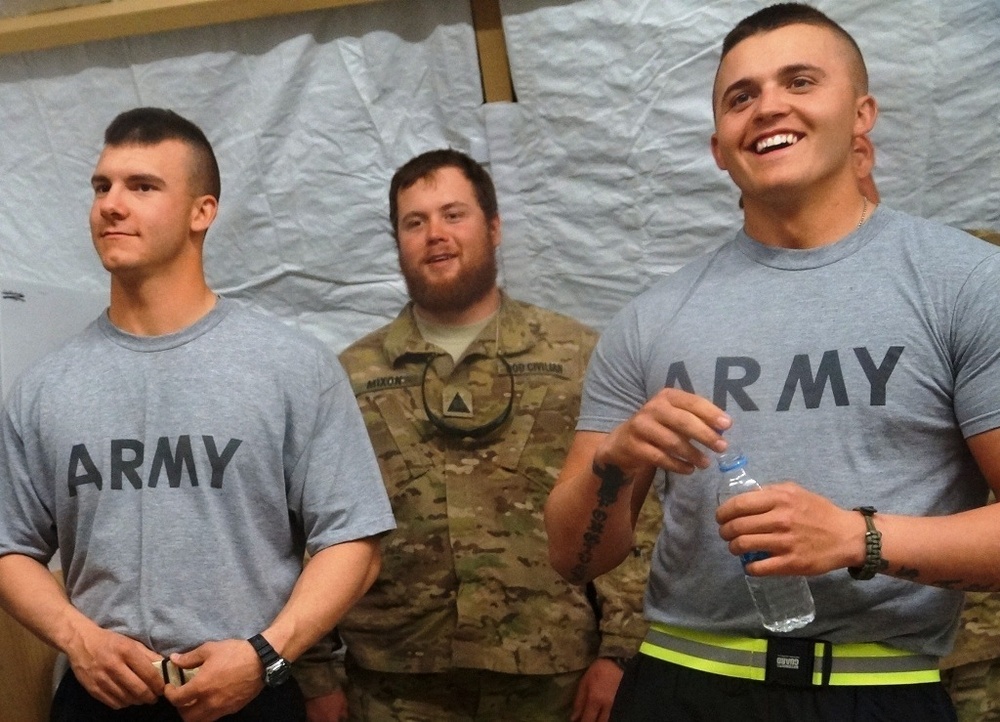
Every unit has one. The guy who can turn a twelve-hour maintenance delay into a bit. The NCO who roasts you so precisely you laugh before you realize you've been had. I spent a decade in Army public affairs, and I can tell you the funniest people I ever met were also some of the ones carrying the heaviest loads. That's not a coincidence. It's a pattern researchers and comedians alike are starting to take seriously.
The Laugh That Got Me Through
Ask any veteran why dark humor shows up so fast in a deployed environment, and you'll get some version of the same answer: because the alternative is unbearable. Gallows humor isn't disrespect. It's a pressure valve, a shared language that says I see what you see, and we're still standing.
That instinct doesn't disappear at the DD-214. A lot of veterans carry it home, and increasingly, they're carrying it onto a stage or into a microphone. Stand-up and podcasting give that same coping mechanism a new room to work in, one with an audience that laughs back.
What the Research Actually Says
A 2024 study in the journal Behavioral Sciences, "Sanity through Insanity: The Use of Dark Humor among United States Veterans," surveyed 93 veterans and found the picture is more complicated than "laughter fixes everything." Dark humor use itself wasn't strongly tied to feeling more connected to fellow veterans, civilian friends, or family.
The bigger finding: veterans who leaned on self-defeating humor reported lower life satisfaction, even when they were socially connected. What actually predicted well-being was the connection itself, feeling close to other veterans and civilians, not the jokes.
That's an important nuance. Humor can open a door to connection. It's the connection walking through that door that does the healing.
From Comedy Bootcamp to the Open Mic
You can see that connection-over-punchline principle in action at the Armed Services Arts Partnership (ASAP), a nonprofit that runs free comedy and arts classes for veterans, service members, and military families. Its comedy program, built in the spirit of Bob Hope's USO tours, includes a six-week Comedy Bootcamp, crash courses, joke-feedback workshops, and graduation shows at chapters around the country.
Veteran Michael Carrasquillo, a program participant, put it plainly: writing and performing comedy "changed how I dealt with my stress and frustration... instead of internalizing my frustration, I was able to put it on paper, take control of my experience, turn a negative to a positive, and bring joy to others."
Bobby Henline is the story most people know. An Army veteran of the 82nd Airborne, Henline survived an IED strike in Iraq in 2007 that killed four soldiers in his vehicle and left him with burns over 40 percent of his body. A rehab therapist suggested stand-up as a way to process what happened. He debuted at the Comedy Store in 2009 and has been performing ever since, telling TIME in 2013 that his goal is "to help more people than the guy that blew me up can hurt."
Henline's story shows up in the Showtime documentary Comedy Warriors: Healing Through Humor, and it's become something of a template: use the stage to say the thing nobody wants to say out loud, and let the room laugh with you instead of look away.
Why Podcasts Are the Natural Next Stage
Stand-up requires a room, a mic, and nerve. A podcast just requires a microphone and someone willing to keep talking. That lower barrier is why so much of this comedic, community-building energy has migrated to podcasting over the last several years.
Shows built by and for veterans, like Drinkin' Bros, built around a "never drink alone again" ethos for military, law enforcement, and first responders, have grown sizable audiences by mixing irreverent humor with real talk. The format works because it mirrors what actually happens in a barracks or a squad bay: jokes first, then the real conversation sneaks in underneath them.
A few reasons the podcast format fits this community so well:
- Low barrier to entry. No club booker required, no crowd to face live, just a mic and a co-host who gets it.
- Asynchronous intimacy. Listeners can have a "hang" with people who understand their experience during a commute, a workout, or a sleepless 2 a.m.
- Room for range. A good episode can swing from a joke about MREs to a serious conversation about a friend lost to suicide, without either one feeling out of place.
- Built-in community. Comment sections, live shows, and Discords turn listeners into a recurring audience, not a one-off crowd.

The Honest Caveat
Here's where I want to be straight with you, because this is a mental health adjacent topic and it deserves more care than a tidy bow. Humor is a legitimate coping tool. It is not treatment, and it's not a replacement for a therapist, a VA counselor, or a hard conversation with someone who loves you.
The research bears this out: humor alone didn't move the needle on life satisfaction in that Behavioral Sciences study. Connection did. So think of comedy and podcasts as one spoke in a bigger wheel, alongside real relationships, professional support when you need it, and honesty with the people around you. Use the jokes to open the door. Don't let them be the only room you live in.
Find Your Room
If any of this sounds familiar, the couple-hours-in feeling of finally being around people who don't need the joke explained, that's the whole point of shows built by veterans, for veterans. Go find one that makes you laugh and makes you feel less alone at the same time. Then check out our full lineup of shows, or if you've got a mic and a story, join the network and add your voice to it.
Sources
Have a military or veteran podcast? Join the network → and get discovered by listeners searching for shows like yours.
More from the blog
Managing Your Finances After the Military
The paycheck was never the hard part. It's everything that came bundled with it that vanishes the day you take off the uniform. Here's how to build a financial plan for the civilian side.
How to Get Your Podcast Discovered: A Guide for Veteran Podcast Creators Joining the Network
Most veteran podcasts don't fail because the content is weak. They fail because nobody can find them. Here's what actually gets a show discovered, backed by real listener data instead of guesswork.
Top 10 Military Podcasts for Men in 2026
From Jocko's leadership lessons to Marcus Luttrell's briefing room, here are ten verified, still-running military podcasts worth your commute in 2026.